Search for:
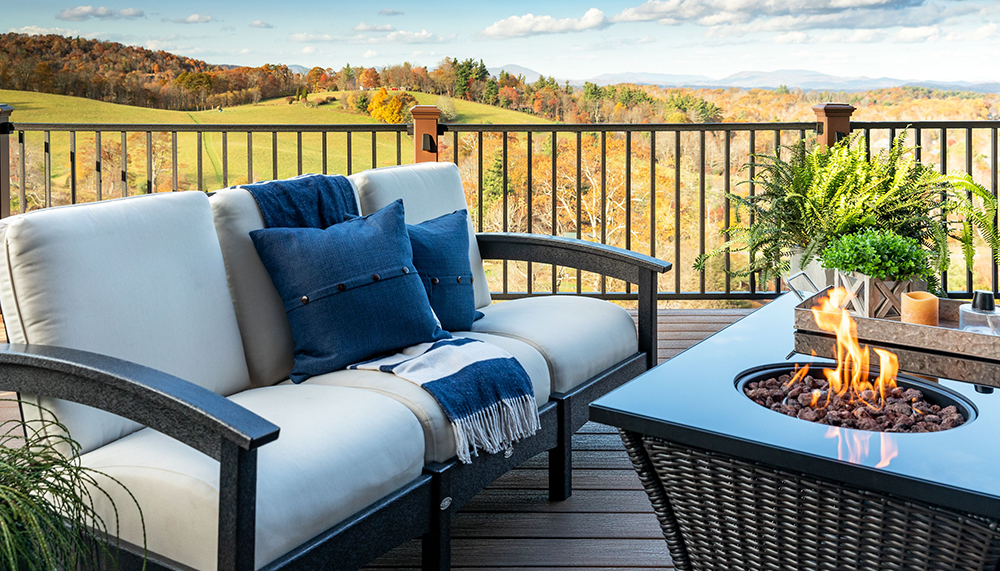
Outdoor patio furniture set with wood, metal and woven materials
What Is the Best Material for Patio Furniture?

Choosing patio furniture is easier once you stop looking only at the style and start thinking about the material. The frame, weave, timber, and fabric will decide how well the furniture handles sun, rain, moisture, daily use, and the odd forgotten cushion left outside overnight.

There is no single best material for every patio. A covered deck, a windy balcony, and an open garden patio all need slightly different furniture. The right choice is the one that suits your weather, how often you use the space, and how much maintenance you are willing to do.
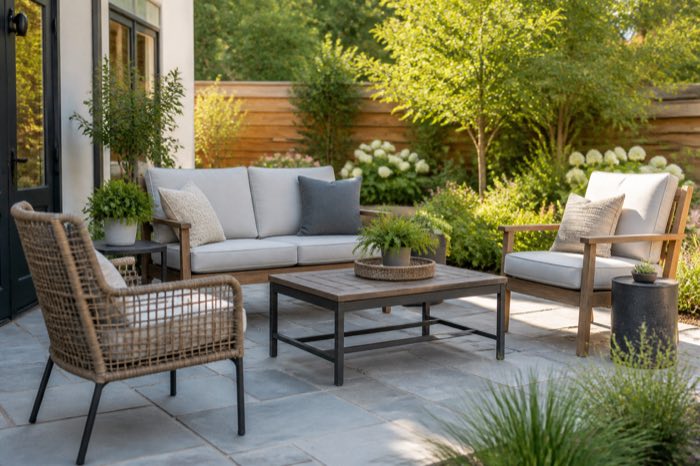
Outdoor patio furniture set with wood, metal and woven materials

Think About Where the Furniture Will Sit

Before comparing materials, look at the patio itself. Furniture that sits under a roof has a much easier life than furniture that stays in direct sun and rain all year. If your patio is open, you will want materials that can deal with moisture and UV exposure without fading, swelling, rusting, or becoming brittle too quickly.

It is also worth thinking about weight. Lightweight chairs are easy to move around, but they can be a nuisance in windy areas. Heavier pieces feel more settled, especially on larger decks, but they are harder to store when the weather turns.

Wood Gives a Warm, Natural Look

Wood is popular because it looks good in almost any outdoor space. Teak, cedar, acacia, and eucalyptus are common choices for patio furniture, although they do not all perform the same way. Teak is usually the stronger option because it has natural oils that help it resist moisture, but it is also one of the more expensive choices.

If you like the look of wood, be honest about the upkeep. Some people enjoy oiling, cleaning, and letting the timber age naturally. Others would rather have furniture that can simply be wiped down and left alone. Wood can last for years, but it does need some care if you want it to keep its colour and avoid cracks.

Metal Is Strong, But Check the Finish

Metal furniture is a good option if you want something sturdy. Aluminium is lighter and does not rust in the same way as iron or steel, which makes it useful for many patios. Wrought iron and steel can be very durable too, but they need a proper protective coating. Once that coating chips, moisture can get in and rust can start to form.

Powder-coated metal is usually a better bet than painted metal for outdoor use. It gives the frame a tougher finish and helps it stand up to everyday knocks, sun, and rain. If you are buying metal furniture, check the joints, legs, and underside of the frame, as those are the areas where cheaper pieces often show their age first.
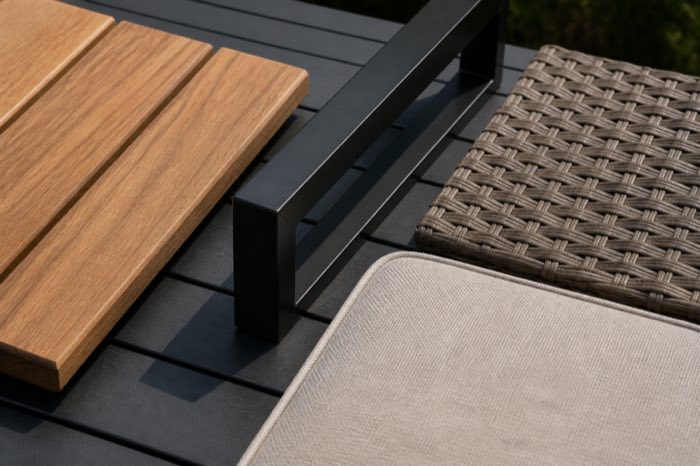
Close-up of teak wood, metal, woven wicker and outdoor cushion fabric

Wicker Looks Relaxed, But Material Matters

Wicker furniture has a softer, more relaxed look, which is why it is common on patios and garden decks. The important point is that wicker refers to the weave, not always the material. Natural wicker can look beautiful, but it is not the best choice for furniture that will be exposed to regular rain or strong sunlight.

For outdoor use, synthetic resin wicker is usually more practical. It handles moisture better, is easier to clean, and does not require as much attention as natural wicker. Even then, quality matters. A tight, even weave and a strong internal frame will last much longer than thin, loose woven furniture that starts sagging after one season.

Plastic and Resin Can Be Practical

Plastic furniture is not always the most stylish option, but it can be useful, especially if you want affordable seating that is easy to move, wash, and store. Higher-quality resin furniture can also hold up well outdoors and is often better than very cheap plastic that fades or cracks after too much sun.

If you choose plastic or resin, look for pieces with a solid feel and UV resistance. Very light furniture may be convenient, but it can also blow around easily and may not feel comfortable for long meals or relaxed afternoons outside.

Do Not Forget the Cushions

The frame gets most of the attention, but cushions often wear out first. Outdoor cushions should use fabric made for sun and moisture exposure. Removable covers are helpful because they can be cleaned more easily, and cushions that dry quickly are better for patios where rain is common.

Even good outdoor cushions will last longer if they are stored when not in use. A storage box, covered shelf, or dry indoor space can make a big difference, especially during wet seasons.
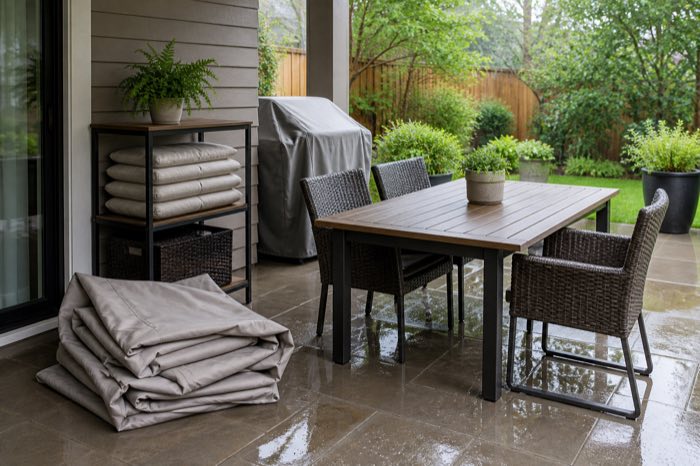
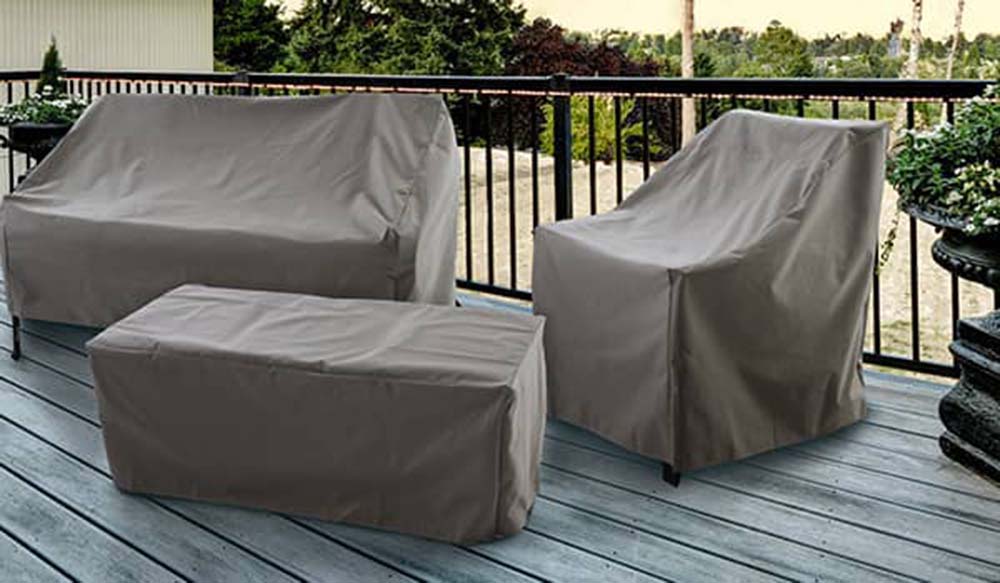
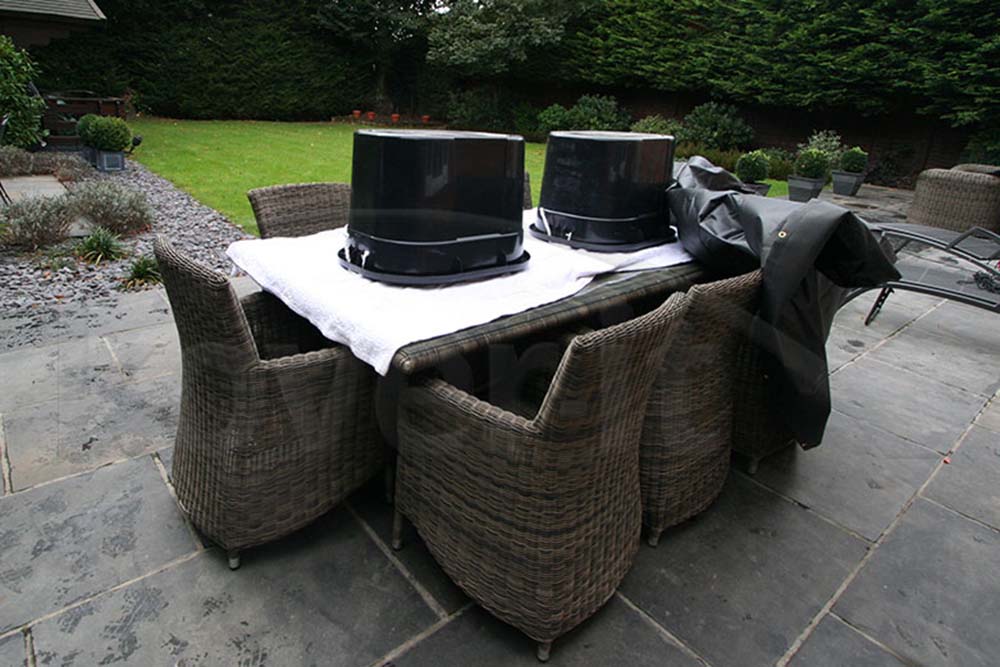
Covered patio furniture and stored cushions after light rain

The Takeaway

If you want the most durable option and do not mind spending more, teak and well-finished metal are strong choices. If you want a relaxed look with easier maintenance, resin wicker is a sensible option. If budget and convenience matter most, good-quality resin or plastic furniture can still do the job, especially in a covered space.

The best patio furniture material is the one that matches your climate, your budget, and the way you use the space. Buy with those three things in mind, and you are far more likely to end up with furniture that still looks good after more than one summer.
How Much Should You Spend on Outdoor Deck Furniture?

Outdoor deck furniture serves many purposes – it can enhance the look and feel of your backyard, provide comfortable seating for your family and guests, and create a functional space for outdoor activities. Choosing the right outdoor furniture for your deck can be an exhilarating process, but it can also be overwhelming, especially when it comes to the budget. In this post, we will discuss how much you should spend on outdoor deck furniture and provide helpful tips to help you make the right decision.

Considerations When Choosing Outdoor Deck Furniture

When it comes to outdoor furniture, there are a few important factors to consider before making a purchase. These include:

(i) The Purpose

If you use the deck primarily for entertaining guests, you’ll want to look into a large dining table and comfortable chairs.

On the contrary, if you use your deck as a quiet retreat, a cozy loveseat or a few lounge chairs may be a better fit. Considering how you will use the deck furniture before making a purchase is something you can’t afford to overlook.

(ii) Climate and Weather Conditions

If you live in an area with frequent rain or snow, go for weather-resistant materials like teak, cedar, or metal. Likewise, if you live in a hot and sunny area, you may want to invest in furniture with built-in sun protection like an umbrella or a canopy.

(iii) Available Space

Measure your deck and make note of any obstacles like stairs or railings that may limit your furniture choices. This will help you avoid buying furniture that is too big or too small for your outdoor deck.

(iv) Personal Style & Preferences

Your personal style and preferences should also be taken into account. Whether you prefer modern, traditional, or eclectic styles, there is a wide variety of outdoor furniture in the market to suit your tastes.

Budgeting for Outdoor Deck Furniture

Once you’ve taken into account your needs and preferences, it’s time to set a budget. It’s important to set a realistic budget that factors in both the cost of the furniture and any additional expenses like shipping or assembly.

There are several factors that affect the cost of outdoor furniture, including the materials used, the size, the piece’s complexity, as well as the brand. High-end brands can be on the expensive side, while budget-friendly options are likely to be less durable and not as comfortable.

When budgeting for outdoor furniture, it’s important to identify which expenses are non-negotiable and which ones can be flexible. For instance, you may be willing to spend more on a high-quality dining table, but save money by settling for less expensive chairs.

Another tip is to look for ways to save money on outdoor furniture. Look for sales or clearance events, shop during off-seasons, and consider purchasing furniture in sets to take advantage of bundle deals.

The Takeaway

When it comes to outdoor furniture, you often get what you pay for. Top-of-the-line furniture is often more durable, comfortable, and stylish, while cheaper options may be less durable and comfortable. However, that doesn’t mean you have to break the bank to get quality furniture. By carefully considering your needs and preferences and setting a realistic budget, you will certainly find outdoor deck furniture that fits both your style and your wallet.

Expert Advice: To Cover Or Not To Cover Patio Furniture?

A patio is one of the most practical home improvement features you can add to your home. No matter the season, there are a lot of activities that can take place in a well-furnished patio including BBQs, relaxing afternoons with family among others. One of the key ways that you can ensure that your patio remains visually alluring and functional is to ensure that the furniture in the space are properly maintained. The best way to do this? Cover your patio furniture.

Top Reasons to Cover Your Patio Furniture

In a nutshell, some of the main reasons why you should cover your patio furniture include:

• To enhance the longevity of your furniture

If your patio is constructed with an open design, your furniture will be constantly exposed to harsh weather conditions including rain, snow, and, direct exposure to the sun. Extreme weather conditions or prolonged exposure will take a toll on your furniture and make them seem worn and old even when they are fairly new.

Covering your furniture will not only help them retain their sheen but it will also increase their lifespan.

• To protect your furniture from exposure to UV lights

Prolonged exposure to the sun’s rays can take a tool on the structural integrity of your furniture especially if you live in an area that is dry. Covering your patio furniture will protect the integrity of the materials used in making the furniture such as natural wickers.

• To protect against rust

If your patio furniture is made of metal material such as wrought iron, covering the furniture will help prevent moisture from reaching the metal material hence preventing the formation of rust.

• To protect from moisture

Prolonged exposure of most of the materials used in making furniture to moisture will have detrimental effects on the furniture. For example, in metal materials moisture may induce the formation of rust, in natural wickers it may cause breakages, while in wood it can lead to rot. Placing a cover on patio furniture will help protect against the collection of moisture on the items. This will increase their durability and helping them in retaining their original appeal.

• To protect furniture fittings

Items such as cushions and pillows that are usually placed on patio furniture can easily get damaged when exposed to the elements. Covering your furniture will help protect your fittings from damage by direct exposure to sun rays, dust, and, other weather elements.

At this point, you may be asking yourself… In what conditions should I cover my patio furniture?

Generally, it is advisable that you cover your patio furniture when they are not in use especially if you have an open patio setting. Consider covering your furniture in the following situations:

  • If you reside in an area with high levels of humidity
  • During the winter season to protect from snow
  • During summer when the sun is shining hot overhead
  • If you reside in an area with high winds that sweep dust and debris into your property
  • If you are not planning on using your patio for a while for example when going on a holiday

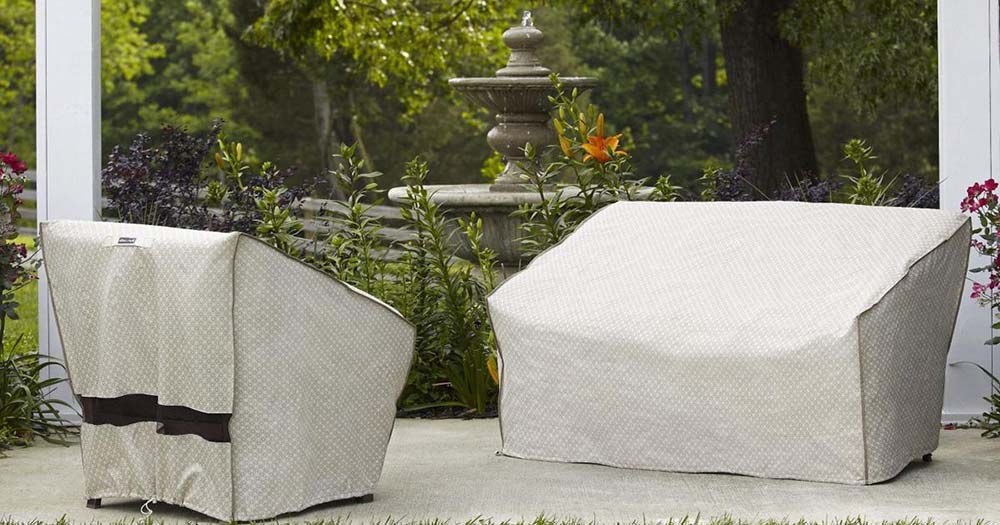
That said, when selecting patio covers, it is important that you look for covers that both breathable and waterproof. The waterproofing feature will prevent moisture from seeping onto your furniture while the breathability feature will allow moisture that may collect under the cover to evaporate quickly.

How Long Does Patio Furniture Usually Last?

Though there’s no set timeline for how long patio furniture lasts, the running standard is about 15 years, give or take. Some may last longer, and other less, depending on a number of factors such as the construction materials, climate, and maintenance. Different climates tend to impact the lifespan of patio furnishings the most. For example, an arid Southwestern climate requires furniture to have adequate UV protection to avoid sun exposure damage. Likewise, humid coastal climates are constantly battling moisture in the air, therefore, special moisture barrier coatings are a must!

Though the actual quality of the furniture is perhaps the most important aspect of its longevity, the next closest one on the list are the frame materials. Wood and iron are the most popular construction materials, but it’s hardly surprising that iron outlasts wood by many years. Of course, there are numerous other options on the market, each with their own projected lifespans, such as:

*Wrought iron- 25 years or longer

*Cast aluminum- 15 years or longer

*Wicker- 15 years or longer

*Teakwood- 25 years or longer

Though these numbers are fairly impressive, it’s also crucial to take into consideration that quality patio furnishings require a large upfront investment. Of course, when considering that a quality patio set can provide 25 years of service, the investment is well worth it! Of the construction materials, teakwood is perhaps the longest lasting with projected lifespans of up to 75 years when maintained.

Since patio furniture is also exposed to the elements (wind, sun, rain, and snow), spills, and constant wear and tear, the manufacturing process also comes into play. For extra sturdy and reinforced structures, powder-coated construction materials are highly recommended. This allows the frame to resist chips, splits, and cracks that shorten its lifespan.

Powder-coating is the only true way to create a moisture repelling barrier. Paint with water-resistant properties simply isn’t strong enough to last a long time. What’s more, powder-coated furnishings also come in a wide range of colors and finishes.

Without question, high quality patio furniture will always outlast affordable lower end options. As the furniture needs to withstand constant elemental exposure, a quality frame with water-resistant textiles is the only true option for a long-lasting set. Apart from price, it really comes down to selecting furniture from a reputable manufacturer that uses quality and sturdy materials.

Though getting off on the right foot is essential, so is the maintenance and upkeep of the patio furnishings. As mentioned, teakwood is high quality, built to last, and out of all of the options, requires the least amount of effort for maintenance. Though wicker is another popular construction material of choice, even with proper care, it simply won’t last as long as teakwood.

Reducing elemental exposure and cleaning the set according to manufacturer’s specifications is a great way to ensure longevity. Though outdoor furniture is made to remain outdoors, reducing the amount of time it spends directly impacted by the elements can make it last longer. As such, moisture and direct sunlight have the most detrimental effects on aging patio furniture.